Bronzino’s Folly

On first meeting Hugh Moreland, Nick describes his physical appearance:  “Moreland, like myself, was then in his early twenties.  He was formed physically in a ‘musical’ mold, classical in type, with a massive, Beethoven-shaped head, high forehead, temples swelling outwards, eyes and nose somehow bunched together in a way to make him glare at times like a High Court judge about to pass sentence.  On the other hand, his short, dark, curly hair recalled a dissipated cherub, a less aggressive, more intellectual version of Folly in Bronzino’s picture, rubicund and mischievous, as he threatens with a fusillade of rose petals the embrace of Venus and Cupid, while Time in the background, whiskered like the Emperor Franz-Josef, looms behind a blue curtain as if evasively vacating the bathroom.” [CCR 21/16]

Venus, Cupid, Folly, and Time Agnolo Bronzino ~1545 oil on wood 57 x 46 in National Gallery,  London photo public domain from Wikimedia Commons

Venus, Cupid, Folly, and Time
Agnolo Bronzino ~1545
oil on wood 57 x 46 in
National Gallery, London
photo public domain from Wikimedia Commons

The painting in question is commonly known as Venus, Cupid, Folly and Time and its painter, Agnolo di Cosimo, is commonly known as Il Bronzino.  Powell’s explication of its narrative content is certainly the funniest, but only one of hundreds lavished upon this engaging and enigmatic painting in the National Gallery of London.  Bronzino (1503-1572) was a Florentine painter, the protege of and later collaborator with Pontormo, and a disciple of Michelangelo.  Bronzino is virtually the paragon of Italian Mannerism, a term used to characterize the evolution of High Renaissance naturalism into a visual language of distortion in the service of expression.  Michelangelo is sometimes described as a Mannerist, but his distortions generate deep wells of genuine feeling in his works.  Bronzino, by contrast, exhibits a technical mastery of illusionism that perhaps has never been equalled, but his glorious surfaces always remain just surfaces.  His Venus, Cupid, Folly and Time has some narration or other about it, but the impression it leaves is that of Bronzino having fun with flesh.  Powell’s droll remark about Time vacating the bathroom calls our attention to Bronzino’s exquisite, vacant genius.

Constant Lambert as a Christ's Hospital Schoolboy George Washington Lambert, 1916 oil on canvas 50 x 37 in Christ's Hospital Foundation photo copyright Christ's Hospital Foundation from BBC Your Paintings

Constant Lambert as a Christ’s Hospital Schoolboy
George Washington Lambert, 1916
oil on canvas 50 x 37 in
Christ’s Hospital Foundation
photo copyright Christ’s Hospital Foundation from BBC Your Paintings

In TKBR Powell gives more evidence of the similarities between his friend Constant Lambert and Hugh Moreland. Powell writes that the painter George Washington Lambert, Constant’s father, was a great admirer of Bronzino and painting his son at age 11, “managed to impose a distinctly Bronzino type of looks…” [TKBR 144-145]

Posted in Uncategorized | Tagged , | 3 Comments

Truth Unveiled by Time

At the Mortimer, Mr. Deacon tells Nick, “I have come to this gin palace primarily to inspect an object of virtu — a classical group in some unspecified material, to be precise.  I shall buy it, if its beauty satisfies me.  Truth Unveiled by Time —in the Villa Borghese, you remember.  I must say in the original marble Bernini has made the wench look as unpalatable as the heartless equality she represents.” [CCR 18/13]

Mr. Deacon has come to buy a small reproduction of an apparently unfinished masterpiece by the architect, sculptor, and painter Gian Lorenzo Bernini (1598-1680).  Born in Naples but known for his work in Rome, Bernini achieved the patronage of Popes Urban VII, Urban X, and Alexander  VII, for whom he served as principle designer of St. Peter’s Basilica and Piazza San Pietro.  Almost equally admired are his sculptures of The Four Rivers in Piazza Navona and the The Ecstacy of Saint Teresa, as well as countless other sculptural groups, church facades, and altarpieces that have come to define the Baroque character of the Eternal City.

Bernini’s Truth Unveiled by Time is embodied by a nude female figure holding the sun in her hand, confident and beautiful, Mr. Deacon’s misogynistic wisecrack notwithstanding.  The radiantly naked Truth has just shed drapery that appears to be leaving her body by virtue of an unseen hand, presumably that of Time.  The group is traditionally judged to be unfinished because of Time’s absence; Bernini is said to have wanted to add it to the grouping, but Time seems to have got to Bernini as well, as he never managed to complete his plan.

Truth Unveiled by Time Gian Lorenzo Bernini, 1645-1652 Galleria Borghese, Rome photo in public domain from Wikimedia Commons

Truth Unveiled by Time
Gian Lorenzo Bernini, 1645-1652
Galleria Borghese, Rome
photo in public domain from Wikimedia Commons

The motif of Bernini’s sculpture is said to be his response to allegations of malfeasance that dogged his reputation after a dangerously faulty bell tower at Saint Peter’s Basilica had to be taken down.  In fact, Bernini had inherited a flawed design for the bell tower and was forced to persist with it as a result of papal ignorance, politics, vanity and indifference.  Though acclaim for Bernini’s work trumped these assaults upon his reputation they never were forgotten, and he went to his grave convinced that eventually his Truth would be unveiled by Time.

Self-Portrain Gian Lorenzo Bernini, ~1635 black and red chalk, heightened with white chalk, 11 x 9 in The Ashmoean Museum, Oxford photo in public domain from Wikimedia Commons

Self-Portrain
Gian Lorenzo Bernini, ~1635
black and red chalk, heightened with white chalk, 11 x 9 in
The Ashmoean Museum, Oxford
photo in public domain from Wikimedia Commons

Bernini’s prodigy as an architect and sculptor sometimes eclipse his reputation as a painter and draughtsman, but this self-portrait drawing from 1625 reveals something of his brilliance in these fields as well.

Mr. Deacon is considering buying a small replica of Bernini’s work, fashioned perhaps from plaster or carved alabaster to feed the art-loving tourist trade.  Judging from what we find for sale online, today’s art-lovers must settle for a digital printout of a photograph of Bernini’s sublime marble sculpture.  In either case, the pitiful degradation of the experience of Bernini’s original masterpiece in its many commercial avatars would surely be considered by the artist to be a case of Truth Obscured by Time.

Posted in Uncategorized | Tagged , | Leave a comment

Legat Caricatures

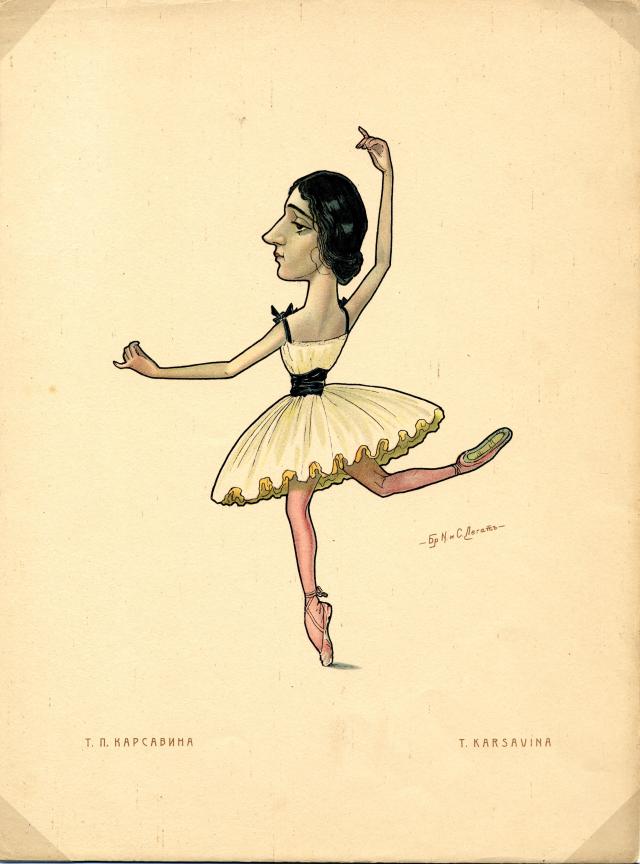
Jenkins describes Moreland’s apartment: “The walls were hung with framed caricatures of dancers in Diaghilev’s early ballets, coloured pictures drawn by the Legat brothers, found by Moreland in a portfolio outside a second-hand book shop; Pavlova, Karsavina; Folkine; others, too whom I have forgotten.” [CCR 11/5]

The Legat brothers, ballet master Νikolaĭ Gustavovich Legat ( 1869-1937) and dancer Sergieĭ Gustavovich Legat (1875-1905) , were with the Marinsky ballet in St. Petersburg when they published Russian Ballet in Caricatures, a set of 93 drawings, about 1903.

Anna Pavlova caricature by Nicolai and Sergei Legat, 1902-1905

Tamara Karsavina Caricature by Nikolai and Sergei Legat, 1902-1905

Tamara Karsavina
Caricature by Nikolai and Sergei Legat, 1902-1905


Fokine Legat

Michael Fokine Caricature by Nikolai and Sergei Legat, 1902-1905

We recall two earlier references to Russian ballet in Dance:  Lady Molly’s uninterest in Russian Ballet [ALM 158] referred to the  Ballets Russes founded by Serge Diaghilev in 1909. Nicolai Legat joined Diaghilev in Paris. The music, costumes, choreography, and stars of the Ballets Russes were another facet of the contribution of the Paris School to Modernism. Fokine not only danced but was the first of many famous choreographers encouraged by Diaghilev. Pavlova and Karsavina were among the best known ballerinas. Today, Pavlova’s name is enshrined in a dessert of meringue topped with fruit that was developed in New Zealand or Australia after she starred there with the Ballets Russes in 1926.  The white meringue was meant to evoke the skirt of Pavlova’s tutu and the topping, a melange of brightly colored fruit, was worthy of a Ballets Russes costume by Bakst, whom Jenkins imagined as clothier of Victor Emanuel II, when he saw the king’s portrait hanging in Foppa’s club [AW 152/145].

Posted in Uncategorized | Leave a comment

Our Van Troost

General Conyers makes some rambling reflections on Dogdene:

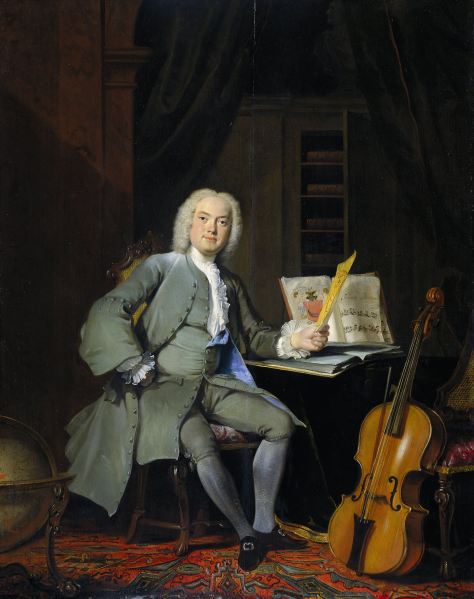
“Then there is the Veronese (see our post  Constable, Pepys, and Veronese at Dogdene). Geoffrey Sleaford has been advised to have it cleaned, but won’t hear of it. Young fellow called Smethyck told him. Smethyck saw our Van Troost and said it was certainly genuine.” [ALM 226/227]

Portrait of a Member of the Van der Mersch Family, Cornelis Troost, 1736 oil on panel, 29" x 23" Rijks Museum, Amsterdam

Portrait of a Member of the Van der Mersch Family, Cornelis Troost, 1736
oil on panel, 29″ x 23″
Rijks Museum, Amsterdam

General Conyers is referring to a painting by Cornelis Troost (Dutch 1697-1750). Troost was one of the foremost Dutch painters of the eighteenth century. Living his entire life in Amsterdam, many of his early commissions were portraits. We show a portrait with a cello to honor General Conyers’ affinity for this instrument. Later Troost painted theater scenes and, during the 1740’s, many military subjects.


Posted in Uncategorized | 1 Comment

Portraits of Pepys

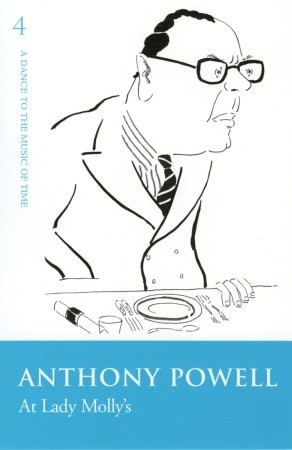
Jenkins meets Widermerpool at Lady Molly’s. Widermerpool is looking wan but revives when he starts to talk about an invitation to visit Dogdene. “The reflection seemed to give him strength. I thought of Pepys and the ‘great black maid’; and immediately Widmerpool’s resemblance to the existing portraits of the diarist became apparent. He had the same put-upon, bad-tempered expression. Only a full-bottomed wig was required to complete the picture.” [ALM 194/195]

Samuel Pepys (1633-1703) was an administrator of the Royal Navy and a member of Parliament during the reigns of Charles II and James II.  He is famous for the diary that he wrote from 1660 to 1669, first published in 1825, in which he gives a vivid account not only of his personal affairs but of the whole of London during the Restoration.  Powell was fascinated by this period of English history and wrote a book on John Aubrey, who like Pepys, is a major source on the intellectual and social history of the period. Aubrey and Pepys were well acquainted; both belonged to the Rota club, a London debating society.

This passage toward the end of ALM refers back to Powell’s pastiche of a Pepys’ diary entry early in ALM (see Constable, Pepys, and Veronese at Dogdene). Pepys wears a long (‘full-bottomed’) wig to match the seventeenth century fashion for men to keep their hair long. Wigs became popular in England when Charles II returned to the throne in 1660, bring the fashion from France, where he had been in exile. Pepys wrote in his diary:

“3rd September 1665: Up, and put on my coloured silk suit, very fine, and my new periwig, bought a good while since, but darst not wear it because the plague was in Westminster when I bought it. And it is a wonder what will be the fashion after the plague is done as to periwigs, for nobody will dare to buy any haire for fear of the infection? That it had been cut off the heads of people dead of the plague.”

Portrait of Samuel Pepys Engraved by T. Bragg for the 1825 edition of Pepys Diary original portrait by Geoffrey Kneller

Portrait of Samuel Pepys
Engraved by T. Bragg for the 1825 edition of Pepys Diary
original portrait by Geoffrey Kneller


Kenneth Widmerpool lunching at his Club Mark Boxer cover illustration for At Lady Molly's  Flamingo edition, 1984

Kenneth Widmerpool lunching at his Club
Mark Boxer
cover illustration for At Lady Molly’s
Flamingo edition, 1984


Pepys is dour enough in his portrait, but our vision of Widermerpool is also informed by this caricature drawn by Mark Boxer, which appears on the cover of the Flamingo edition (1984) of ALM.

Posted in Uncategorized | Leave a comment

A Sergeant from a Snaffles

Dicky Umfraville talks about the artistic aspirations of his ex-wife, Lady Anne Stepney, but adds that he, himself, “Can’t tell a Sargent from a ‘Snaffles.’” (ATM p 181)

A snaffle is a common type of horse bit. ‘Snaffles’ was Charles Johnson Payne (1884-1967), who worked as a graphic artist during World War I but after the war, concentrated on prints of sports: hunting, polo, fishing, pig-sticking in India, racing. The example shown below, from a Lawrences Auctioneers catalog, shows some of Snaffles characteristics, like a penciled signature and a humorous caption. An impressed mark of a pair of interlocking snaffles, often part of his print borders, is reportedly present, but we cannot see it on this reproduction.

The Worst View in Europe Snaffles Color print, 16 x 26 in

The Worst View in Europe
Snaffles
Color print, 16 x 26 in

Bus Horses in Jerusalem John Singer Sargent, 1905 watercolor on paper, 16 X 21 in Isabel Stewart Gardner Museum, Boston

Bus Horses in Jerusalem
John Singer Sargent, 1905
watercolor on paper, 16 X 21 in
Isabella Stewart Gardner Museum, Boston


Isabella Stewart Gardner John Singer Sargent, 1888 oil on canvas, 76 x 32 in. Isabella Stewart Gardner Museum

Isabella Stewart Gardner
John Singer Sargent, 1888
oil on canvas, 76 x 32 in.
Isabella Stewart Gardner Museum

John Singer Sargent (1856-1925) was prolific, producing over 900 oils, over 2000 watercolors, and numerous drawings.  He was born in Florence to American parents, studied in Paris, and spent much of his life painting in London. His portraits of the rich and famous were in demand on both sides of the Atlantic. This portrait of one of his patrons, Isabella Stewart Gardner, showed so much flesh that her husband asked her not to display it publicly while he was alive. We have highlighted a watercolor of horses to show how his elegant realism contrasted with Snaffles’ jocularity.  Umfraville’s mot is the only mention of the Sargent in Dance, so we know nothing of Powell’s opinion of him. Rodin called him “the Van Dyck of our time;” (John Singer Sargent: The Early Portraits, 1998, p 150), but others preferred the Modernism that figures so prominently in Dance rather than Sargent’s realism. Roger Fry called the work “wonderful indeed, but most wonderful that this wonderful performance should ever have been confused with that of an artist.” Ivan Kenneally, writing for an exhibit of Sargent watercolors at the Museum of Fine Arts, Boston, examines Sargent’s relation to Modernism and puts Fry’s put down to rest.

Posted in Uncategorized | Leave a comment

The School of Paris and The Celtic Twilight

Visits to the Jeavons’ household help Nick begin to fill out his picture of Molly Jeavons:  “She might have the acquisitive instinct to capture from her first marriage (if that was indeed their provenance) such spoils  as the Wilson and the Greuze, while remaining wholly untouched by the intellectual emancipation, however skin-deep, of her generation:  the Russian Ballet: the painters of the Paris School:  novels and poetry of the period:  not even such a mournful haunt of the third-rate as the Celtic Twilight had played a part in her life.” [ALM 158/]

The Marketplace, Vitebsk Marc Chagall, 1917 oil on canvas Oil on canvas; 26  x 38  in. (66.4 x 97.2 cm) The Metropolitan Museum  © 2011 Artists Rights Society (ARS), New York / ADAGP, Paris

The Marketplace, Vitebsk
Marc Chagall, 1917
oil on canvas Oil on canvas; 26 x 38 in. (66.4 x 97.2 cm)
The Metropolitan Museum
© 2011 Artists Rights Society (ARS), New York / ADAGP, Paris

The Paris School alludes not so much to a style of art but to Paris’ role as the magnet for forward-thinking artists of every stripe during the first part of the 20th century, up until World War II.  In the period before World War I, which would be when Lady Molly was coming of age as the mistress of Dogdene, the Paris School would have included Picasso and Miro among its painters, Brancusi and Modigliani among its sculptors. It is Lady Molly’s immunity to so many new strains of art — Cubism, Surrealism, the magical realism of Chagall, the expressionism of Soutine, the elongated figures of Modigliani — that signals her lack of enthusiasm for art, despite the Wilson and Greuze on her walls.  We could show any number of the diverse output of the School of Paris, but we have chosen here an artist not actually mentioned in Dance.


William Butler Yeats John Butler Yeats, Portrait of his son, W.B. Yeats; frontispiece to W.B. Yeats, Celtic Twilight, 1896

William Butler Yeats
John Butler Yeats, Portrait of his son, W.B. Yeats; frontispiece to W.B. Yeats, Celtic Twilight, 1896

The Celtic Twilight refers to a renaissance of Irish literature focused on a revival of interest in Gaelic folklore and Irish nationalism at the end of the 19th century.  The name itself derives from William Butler Yeats’ 1893 collection of tales and poems entitled “The Celtic Twilight.” The Celtic Twilight also inspired a number of visual artists and an increased interest in older designs like the Celtic cross.  Jenkins is not alone in disparaging this movement; in Finnegan’s Wake, James Joyce wrote of the “cultic twalette,” but it should be remarked that its luminaries include not only Yeats but Sean O’Casey, John Millington Synge, and George Bernard Shaw.

Posted in Uncategorized | 2 Comments

A Portrait by Lawrence

At Thrubworth, Jenkins sees a “full-length portrait by Lawrence, of an officer wearing the slung jacket of a hussar.”  Errigde explains that this is the “4th Lord Erridge and 1st Earl of Warminster,” a contemporary of the Duke of Wellington. [ALM 149/149]

Charles Stewart, The Third Marquess of Londonderry Sir Thomas Lawrence, 1812 The National Portrait Gallery photo in public domain from Wikimedia Commons

Charles Vane-Stewart, The Third Marquess of Londonderry
Sir Thomas Lawrence, 1812
The National Portrait Gallery
oil on canvas, 57 X 46 in. photo in public domain from Wikimedia Commons


Thomas Lawrence (1769-1830) was a portrait painter and president of the Royal Academy. His flattering portraits were in demand by the artistocracy. This portrait by Lawrence shows the Third Marquess of Londonderry in a hussar’s uniform. A very similar portrait, dated 1814, is in the National Gallery in London on loan from the executors of the late 9th Marquess of Londonderry. Lawrence charged more for more complex paintings, so the full-length portrayal and the detail of the hussar’s uniform showed the affluence or at least the extravagance of the Erridge’s ancestor.

Posted in Uncategorized | Leave a comment

A Statue of Venus

Jenkins saw Mona as “like a strapping statue of Venus, conceived at a period when a touch of vulgarity had found its way into classical sculpture. “  [ALM 107/105 ]

Venus de Milo Alexandros of Antioch Between 130 and 100 BC Marble Louvre Museum image public domain from Wikimedia Commons

Venus de Milo
Alexandros of Antioch
Between 130 and 100 BC
Marble
Louvre Museum
image public domain from Wikimedia Commons

Roman bronze statue of Venus St. Albans Museum, UK

Roman bronze statue of Venus
St. Albans Museum, UK


We have already seen how Quiggins thought contemporary sculptors might treat statuesque Mona. Now Jenkins is clearly not referring to the classic Venus de Milo but looking toward later visions of the goddess of love.

Posted in Uncategorized | 1 Comment

Dutch Genre Painting

The thought of General Conyers playing his cello reminds Jenkins of “Dutch genre pictures, sentimental yet at the same time impressive, not only on account of their adroit recession and delicate colour tones, but also from the deep social conviction of the painter.” [ALM 72/69]

Rural Musicians Adrien van Ostade, ~1655 oil on panel, 15 X 12 in Hermitage Museum images in public domain from Wikimedia Commons

Rural Musicians
Adriaen van Ostade, ~1655
oil on panel, 15 X 12 in
Hermitage Museum
images in public domain from Wikimedia Commons


When Dutch painting flourished in the seventeenth century, painters commonly devoted themselves to scenes of everyday life, called genre paintings. Maybe Nick was thinking of something like this cellist in a painting by Adriaen van Ostade (1610-1685).


Posted in Uncategorized | Leave a comment